dolphins-navarre-echolocation
🐬 How Dolphins “See” Underwater
A Family Adventure Complex Challenge
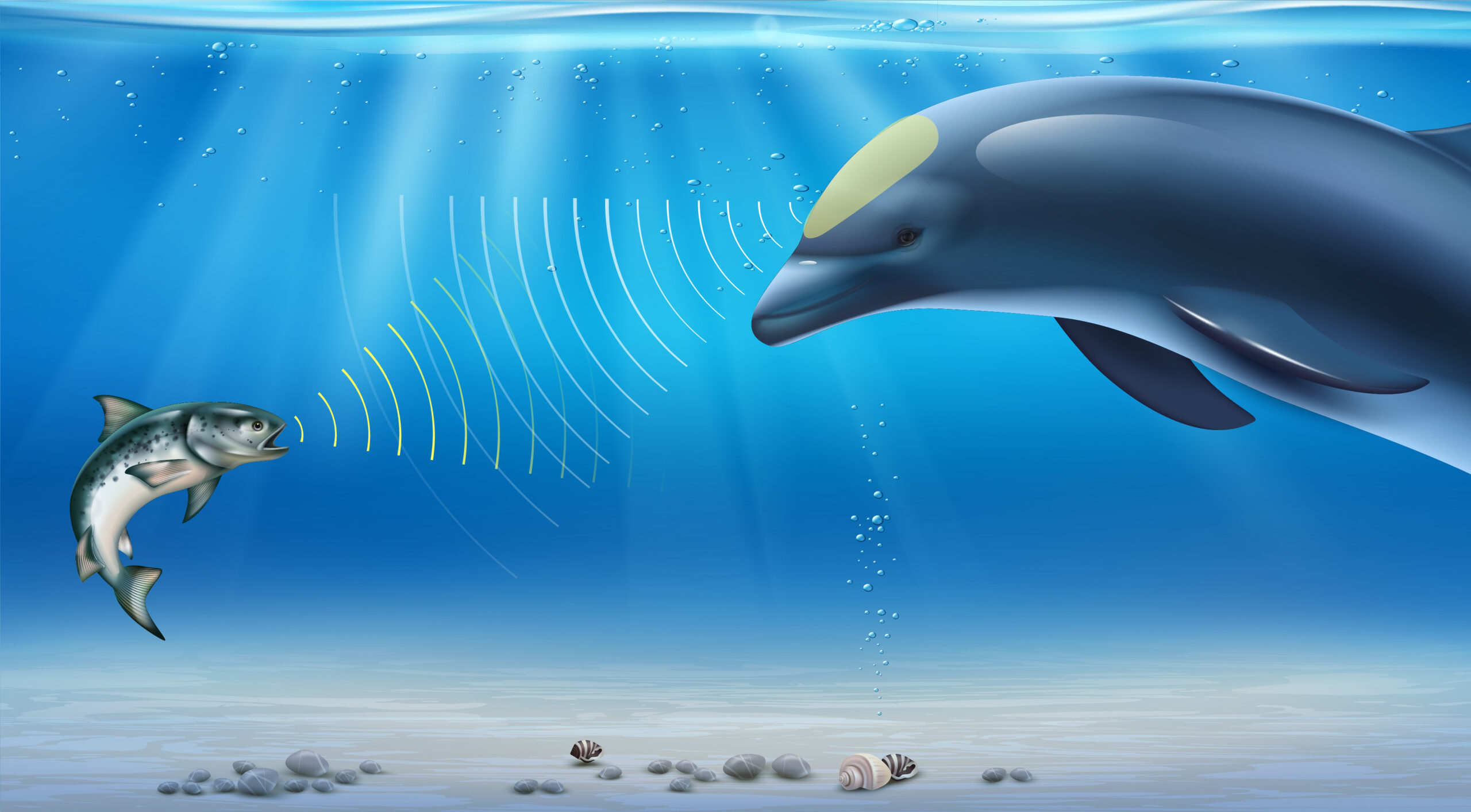
Echolocation Depiction
🌊 Did You Know?
Dolphins in Navarre rely on a remarkable ability called echolocation to find food and navigate their surroundings in the Santa Rosa Sound.
Instead of using their eyes alone, dolphins send out high-frequency sound waves—kind of like tiny underwater “clicks.” When those sound waves hit an object, like a fish or even the sandy bottom, they bounce back as echoes.
By listening to those echoes, dolphins can figure out:
- Where something is
- How far away it is
- How big it might be
- Even what shape it is
This allows them to hunt and move with precision—even in murky water or at night.
🧠 How Dolphins in Navarre Use Echolocation
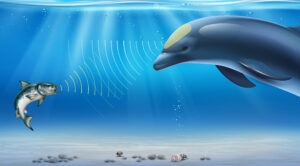
Echolocation realistic infographics with dolphin using bio sonar under water.
Think of it like nature’s version of sonar (the same concept used by submarines).
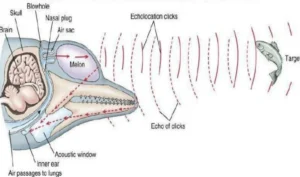
- Dolphins produce clicking sounds in their nasal passages
- These sounds travel through the water
- When they hit an object, they bounce back
- The dolphin receives the echo through its lower jaw and inner ear
- Its brain turns those echoes into a “picture” of the environment
It happens incredibly fast—so fast that dolphins can track moving fish in real time.
🐟 Why Is This Important in the Santa Rosa Sound?
The Santa Rosa Sound is a beautiful but sometimes low-visibility environment due to:
- Sand and sediment in the water
- Changing tides
- Weather and wind conditions
Because of this, echolocation is essential. It allows dolphins to:
- Hunt efficiently even when they can’t see clearly
- Navigate safely around boats, docks, and shallow areas
- Work together in groups to catch fish
👨👩👧👦 Family Talk Moment
Here’s a fun question to ask your kids before your visit:
👉 If you couldn’t see underwater, how would you find your food?
This is a great way to connect what they’re learning to what they’ll experience when they see dolphins in real life.
🚤 Bringing It to Life at the Adventure Complex
When you’re out on a pontoon, riding a Waverunner, or enjoying a dolphin excursion, there’s a good chance the dolphins you see are using echolocation right below the surface.
Even if the water looks calm or slightly cloudy, they are actively:
- Searching for fish
- Communicating with each other
- Navigating their environment with precision
It’s a reminder that there’s a whole world happening just beneath the surface.
🌊 Fun Fact
Dolphins can make up to 1,000 clicking sounds per second when they are focused on hunting. This helps them track fast-moving fish with incredible accuracy.

You can find more information on dolphins and porpoises at NOAA.
🌅 Why It Matters
Dolphins are incredibly intelligent animals, and echolocation is just one example of how they’ve adapted to thrive in coastal environments like ours.
Understanding this helps us:
- Appreciate wildlife on a deeper level
- Respect their space when we’re on the water
- Create meaningful family moments rooted in learning and discovery
Planning your visit? Explore all the things to do in Navarre at Navarre Family Watersports Adventure Complex. Spend the day on the water and experience what you’ve learned in Navarre’s beautiful natural environment.
Our team is out on the water everyday and can help direct you to your best chances to see dolphins or take a tour with us on our dolphin excursion.
We hope you have enjoyed this article. Please see more of our educational articles here.